
Songs of Innocence and of Experience
JESSICA ALAZRAKI and ENIO ARROYO GOMEZ
January 15 – February 21, 2027
Curation and exhibition text by Viljon Caka
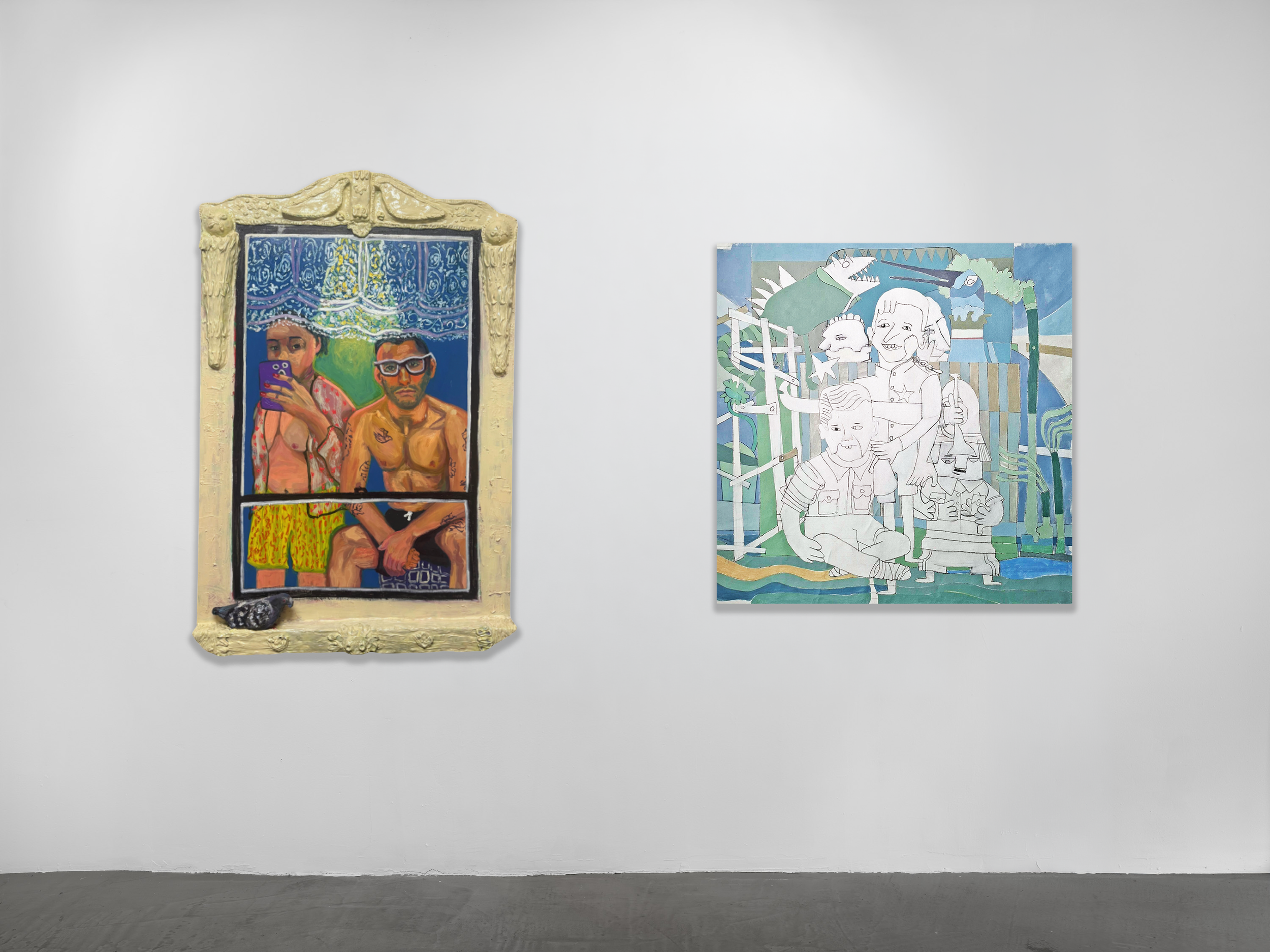
McBride / Dillman is pleased to present Songs of Innocence and of Experience, a two-person exhibition of paintings by Jessica Alazraki and Enio Arroyo Gomez, opening January 15, 2027, with a reception from 6–8 pm and running through February 21, 2027. Borrowing its title from William Blake’s exploration of the contrary states of the human soul, the exhibition considers the coexistence of seemingly opposing emotional and psychological forces in the paintings of Jessica Alazraki and Enio Arroyo Gomez. Although their figures inhabit strikingly different worlds, both artists employ a deliberately naïve visual language, drawing upon the expressive freedom of childlike image-making. Through distortions of perspective, exaggerated proportions, and vibrant palettes, they construct scenes that appear immediately accessible yet resist straightforward interpretation. The apparent simplicity of their visual languages belies the complexity of the worlds they depict, inviting viewers to question not only what they are seeing, but also the assumptions that inform their interpretations.
Alazraki’s richly patterned domestic environments offer glimpses into intimate lives, where gestures, expressions, and relationships suggest narratives that remain open-ended. A child looks away pensively while holding an adult’s hand; a family gathered around a dinner table recalls the familiar ritual of posing for a photograph, their expressions suggesting the impatience of subjects waiting for the moment to pass. Although Alazraki describes her paintings as daydreams of immigrant life, where each ordinary moment is considered sacred, the demeanor of her subjects at times introduces a subtle unease that complicates this apparent warmth. In allowing them the full range of ordinary human expression, Alazraki invites us to consider how our own cultural experiences and expectations inform our reading of their lives.
Arroyo Gomez’s surreal, often carnivalesque compositions push these ambiguities toward the absurd, populating his paintings with distorted figures whose intentions and relationships are as unstable as the worlds they inhabit. A vomiting stuffed pig hides beneath a table as an authoritative male figure sits with his legs crossed, wearing women’s shoes; a ghostly family portrait emerges amid strange creatures in an industrial setting. His deceptively naïve linework, exaggerated figuration, and vibrant palette evoke the imaginative freedom of childhood, where the boundaries between the real and the fantastical are fluid. Here, however, that freedom becomes a vehicle for exploring the more unsettling and contradictory aspects of human experience.
For both artists, the adoption of a childlike visual language is not a retreat from the complexities of adulthood but a means of engaging with them. Much as Blake understood innocence and experience as contrary yet interdependent states, Alazraki and Arroyo Gomez allow these qualities to coexist without resolving their contradictions, inviting viewers to reconsider the distinctions they instinctively draw between tenderness and unease, playfulness and disturbance, innocence and experience.