
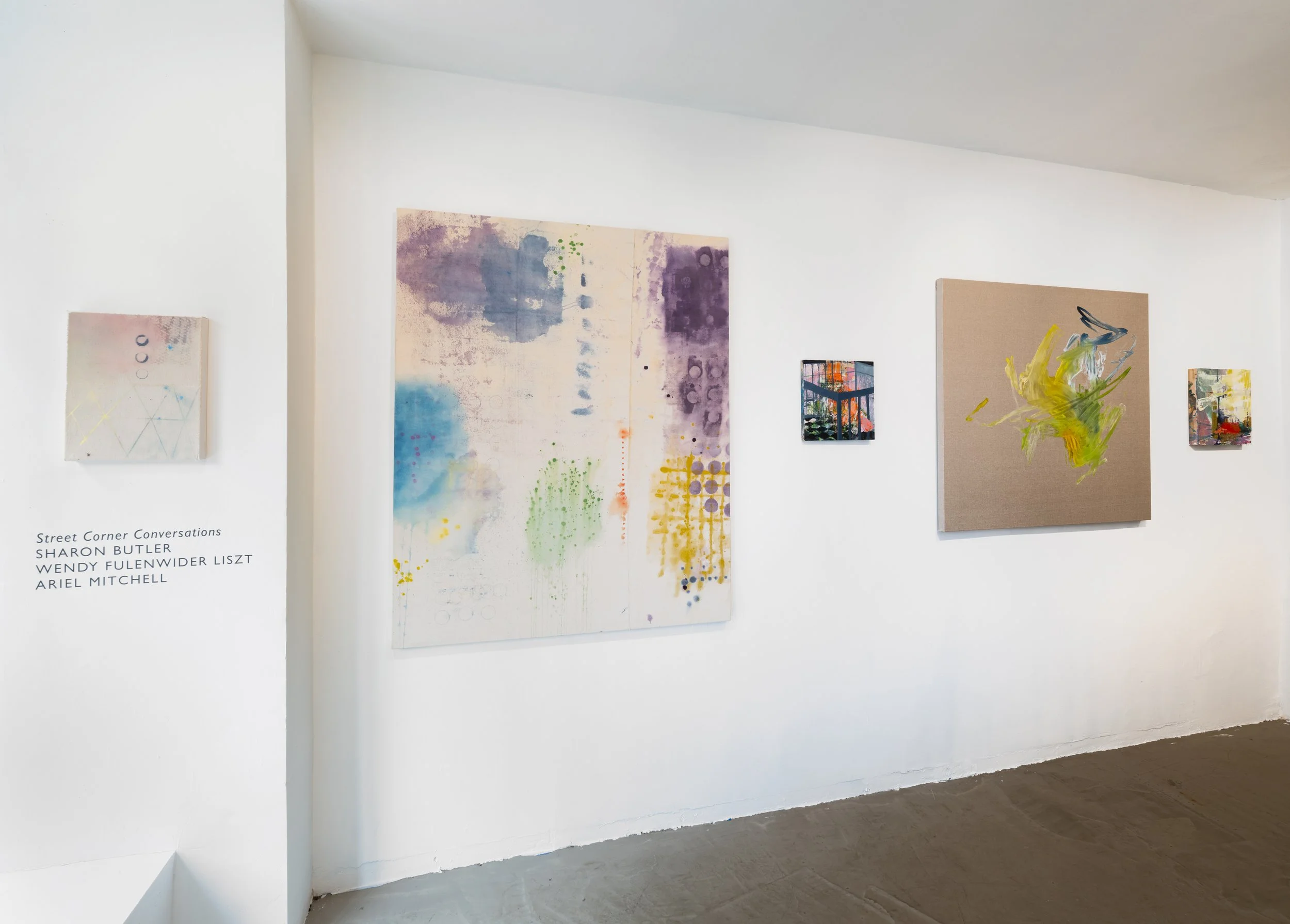
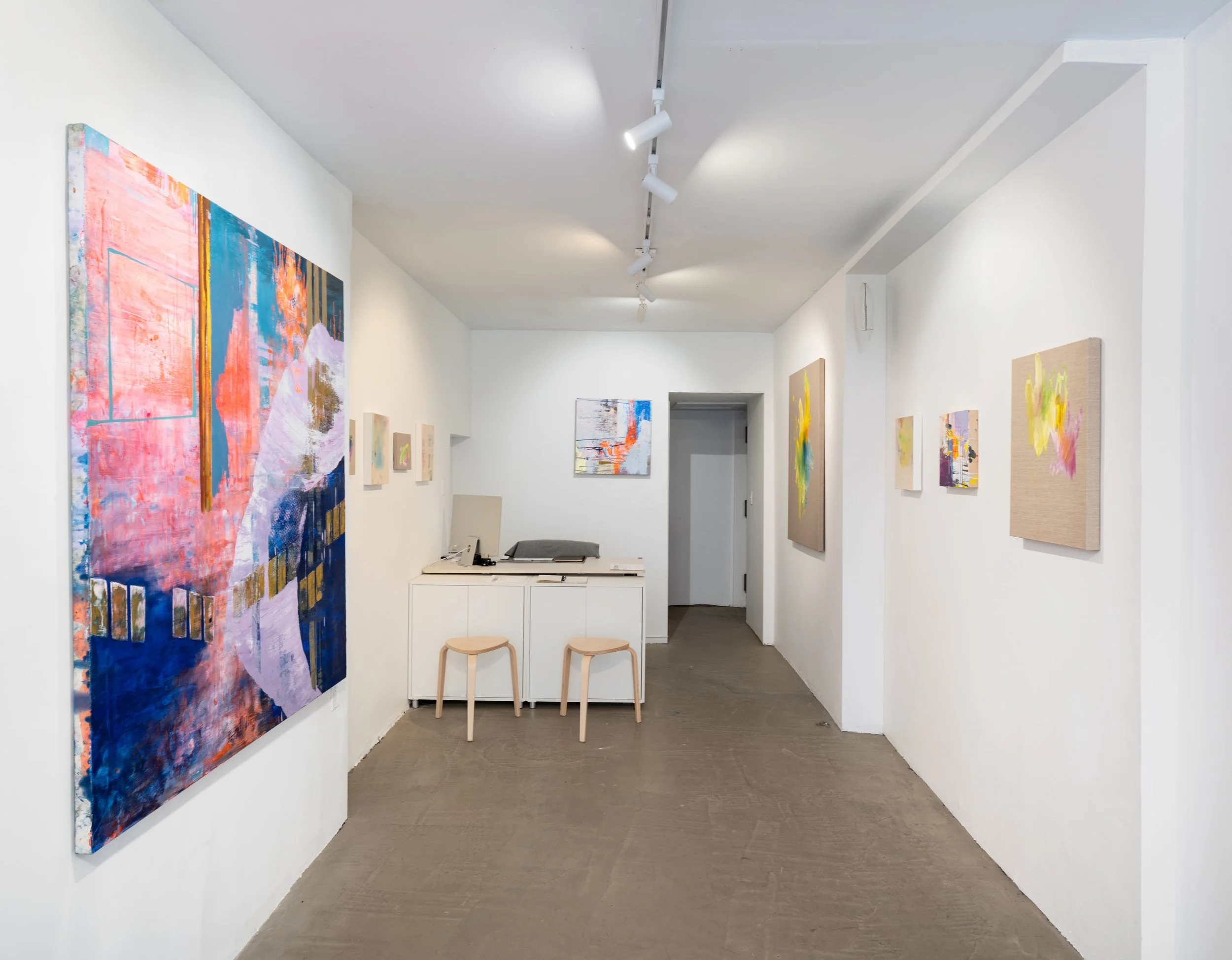
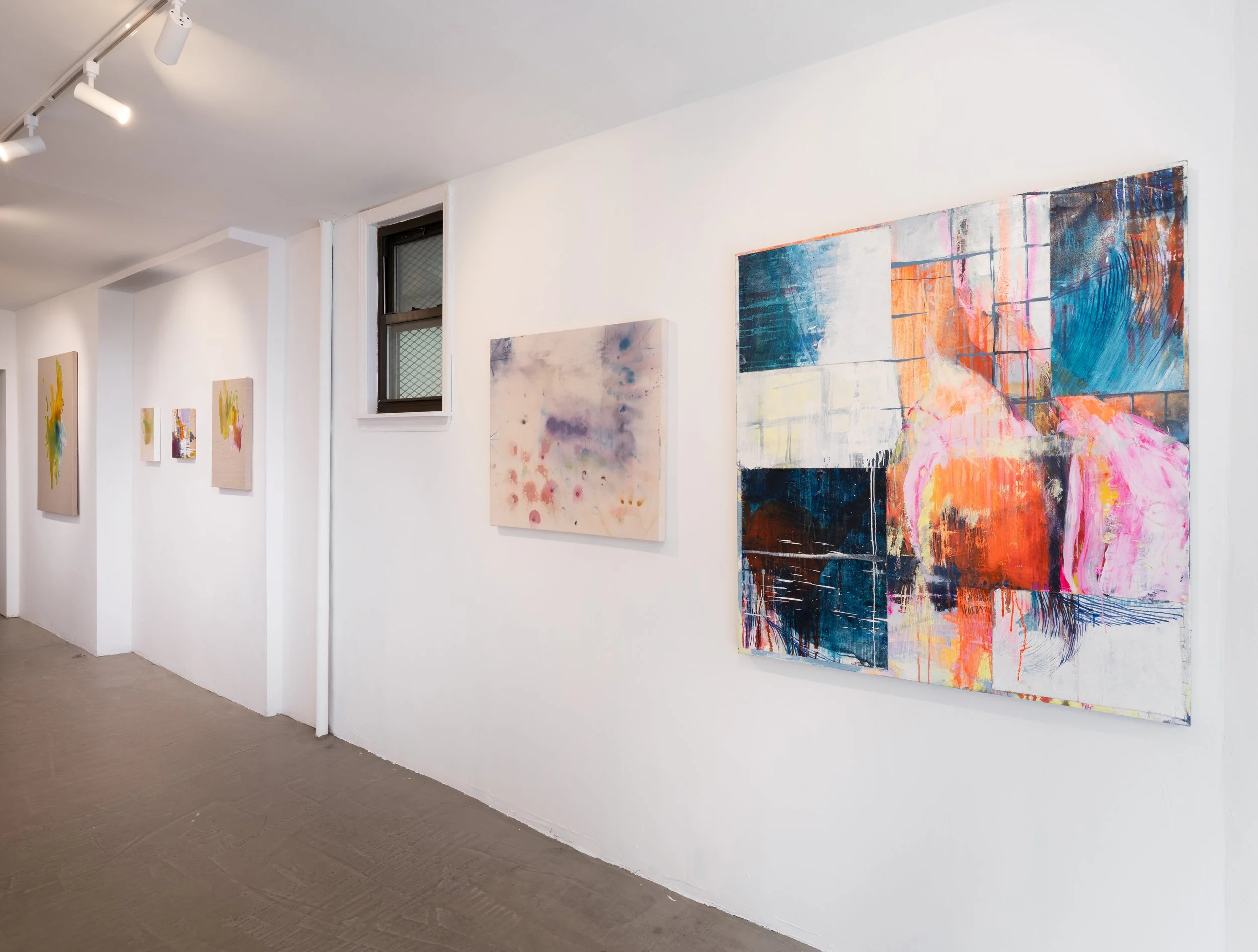
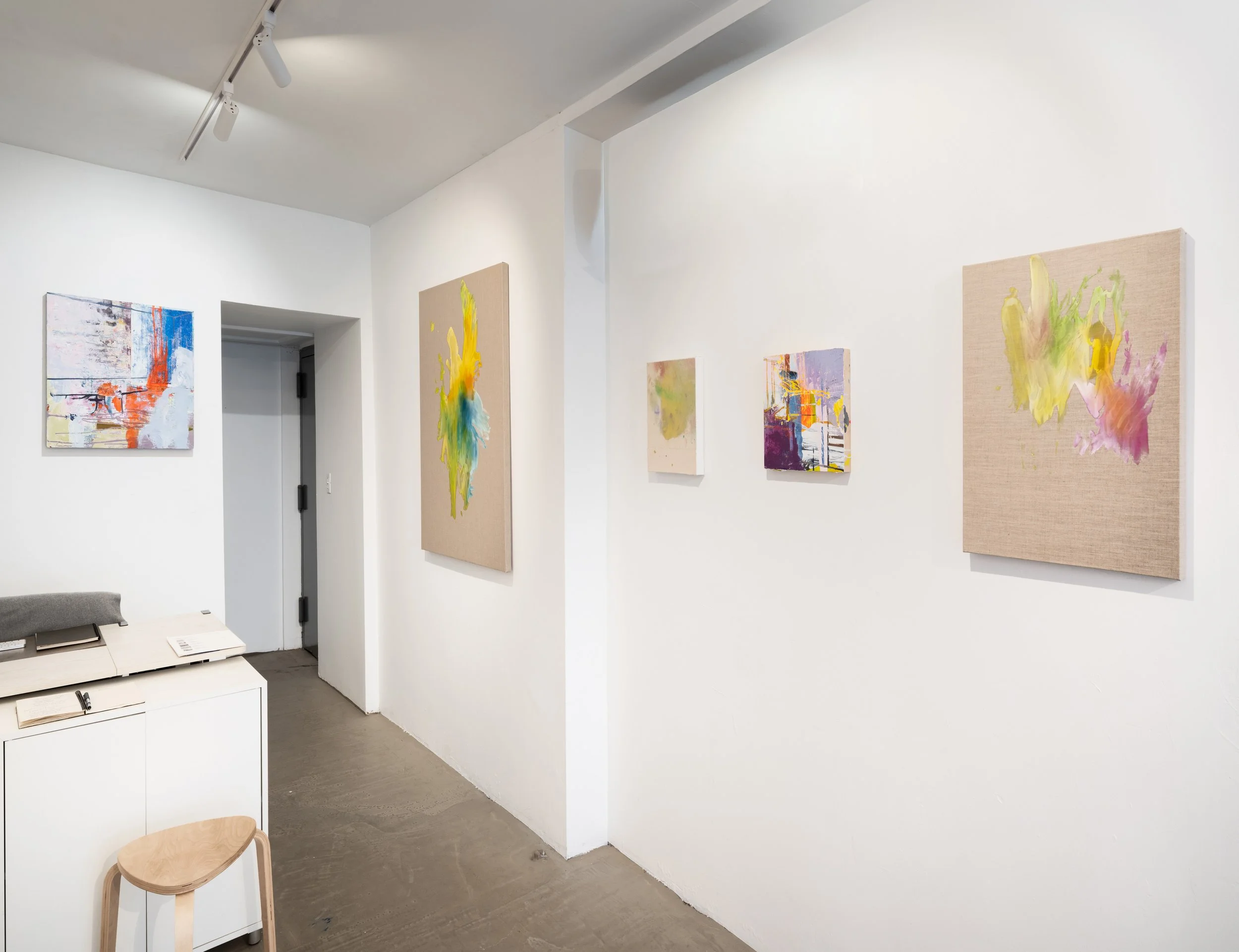
STREET CORNER CONVERSATIONS
SHARON BUTLER, WENDY FULENWIDER LISZT AND ARIEL MITCHELL
Artist Talk:
February 8, 2026 2 pm
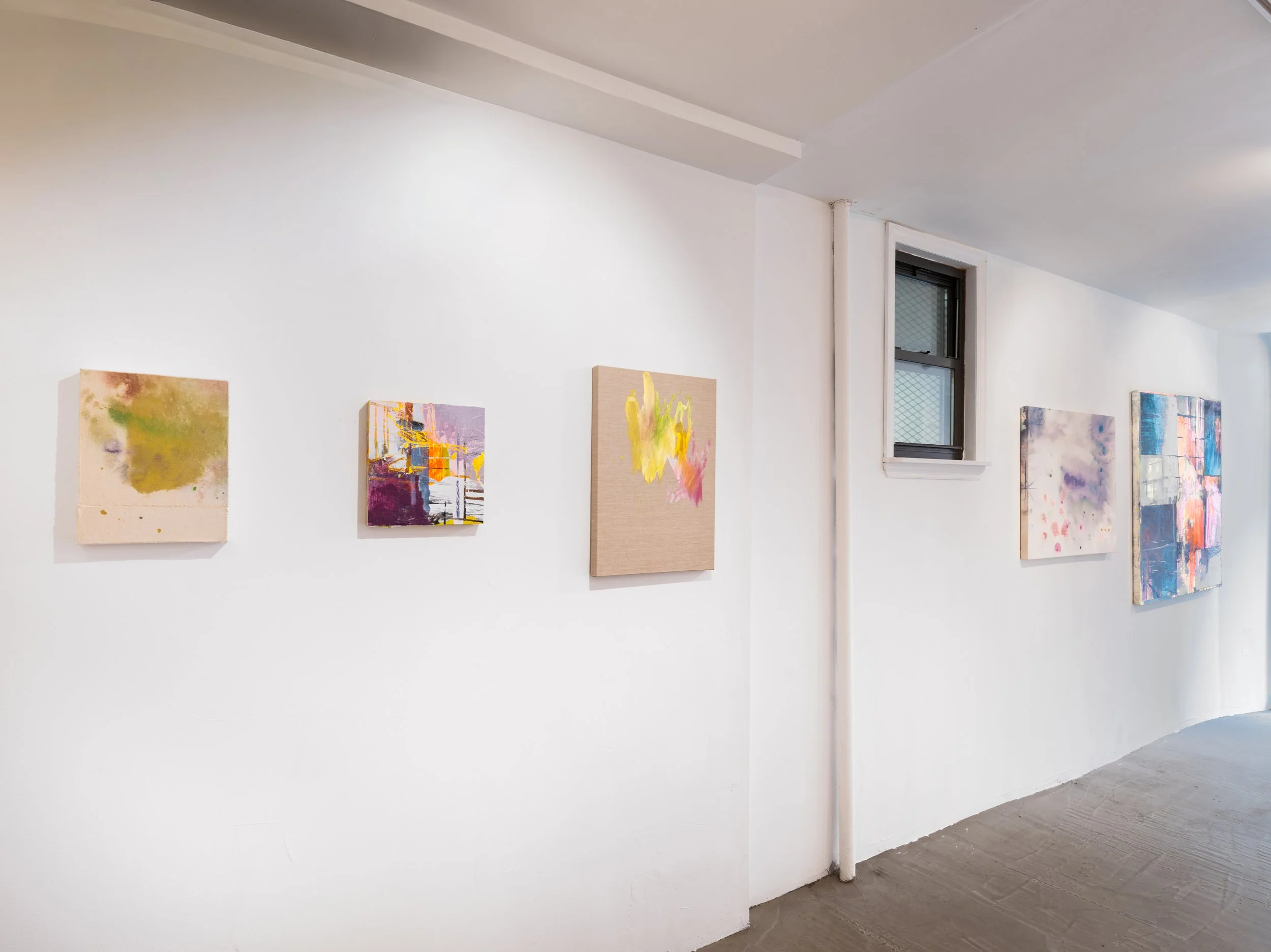
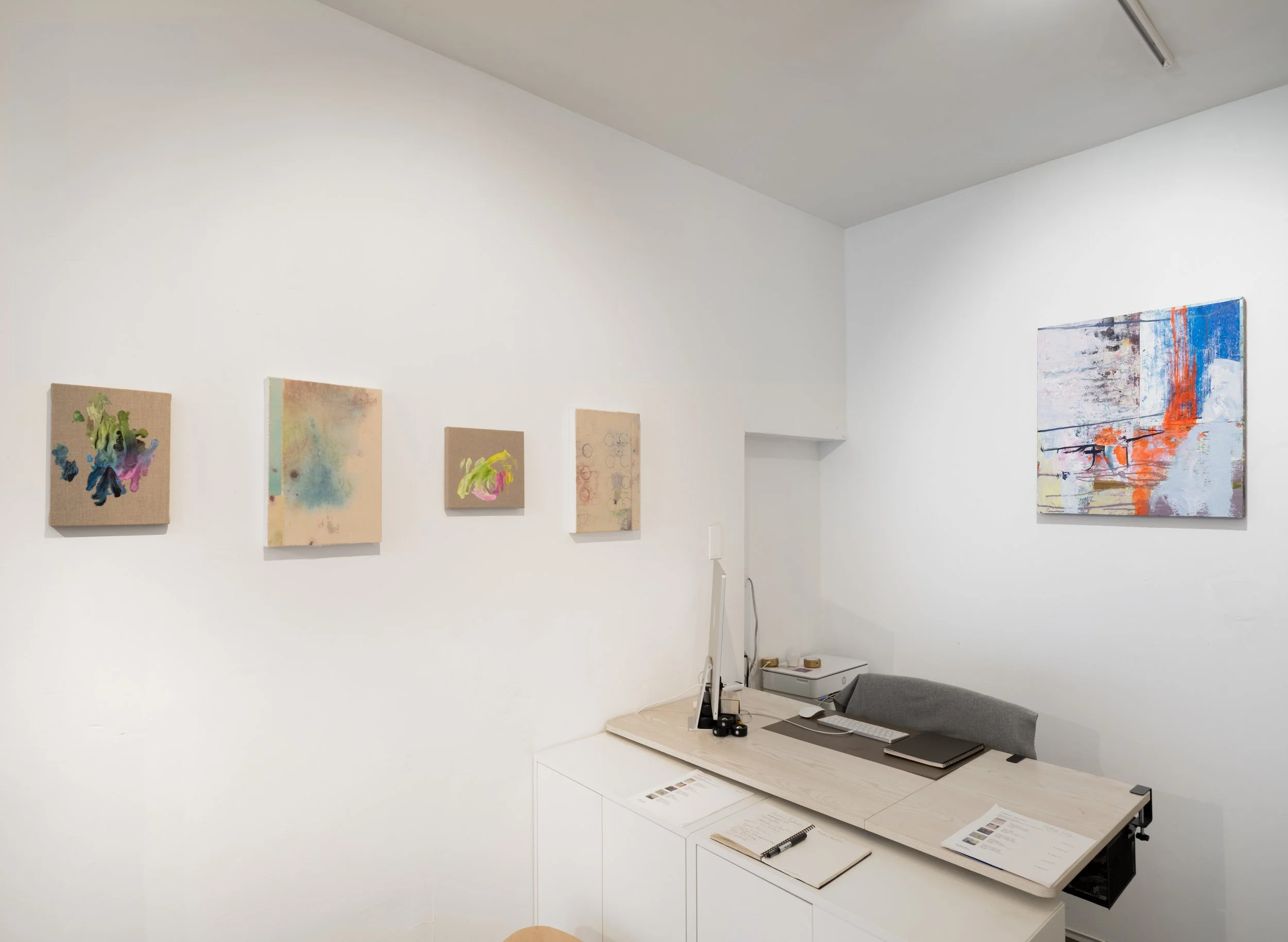
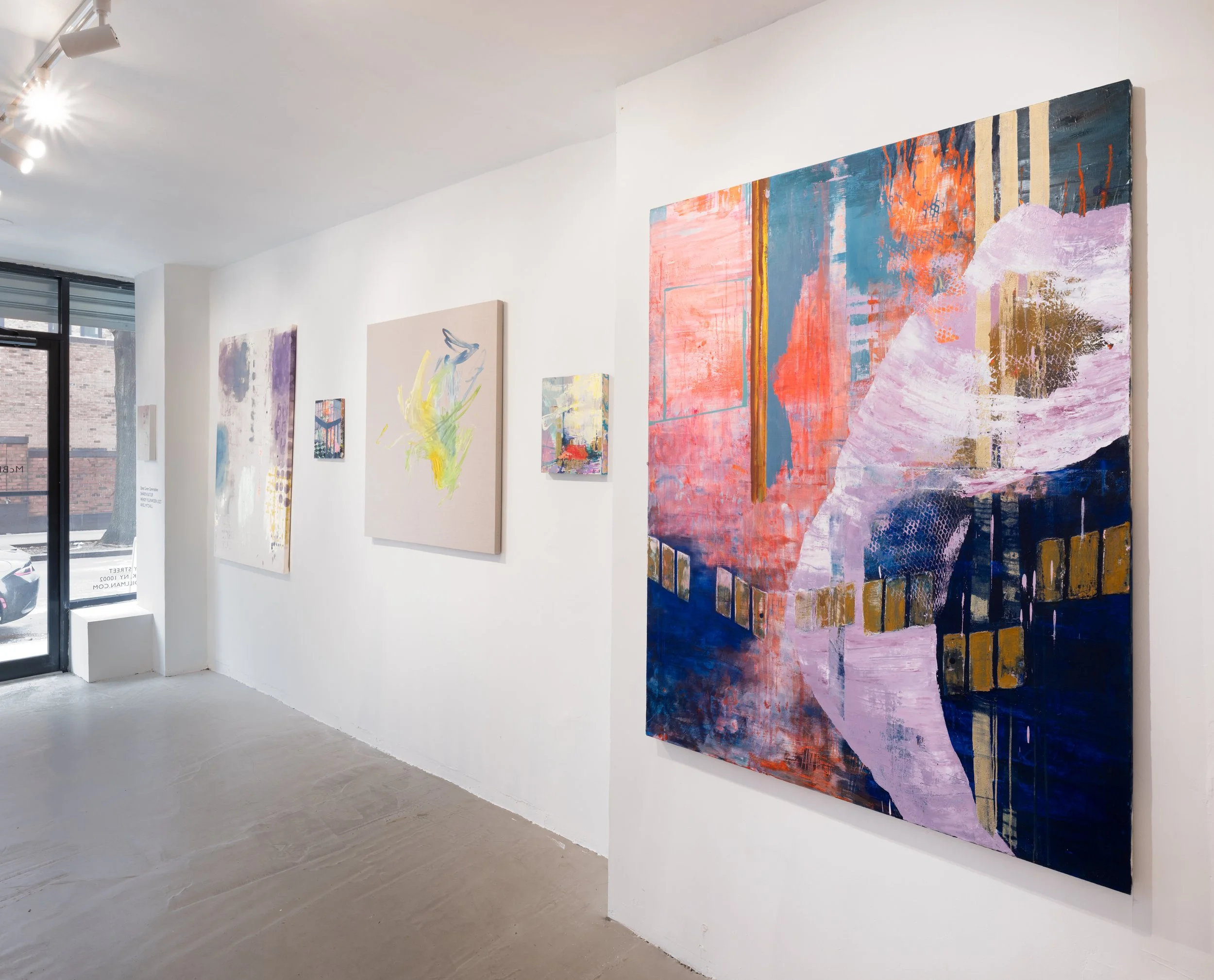
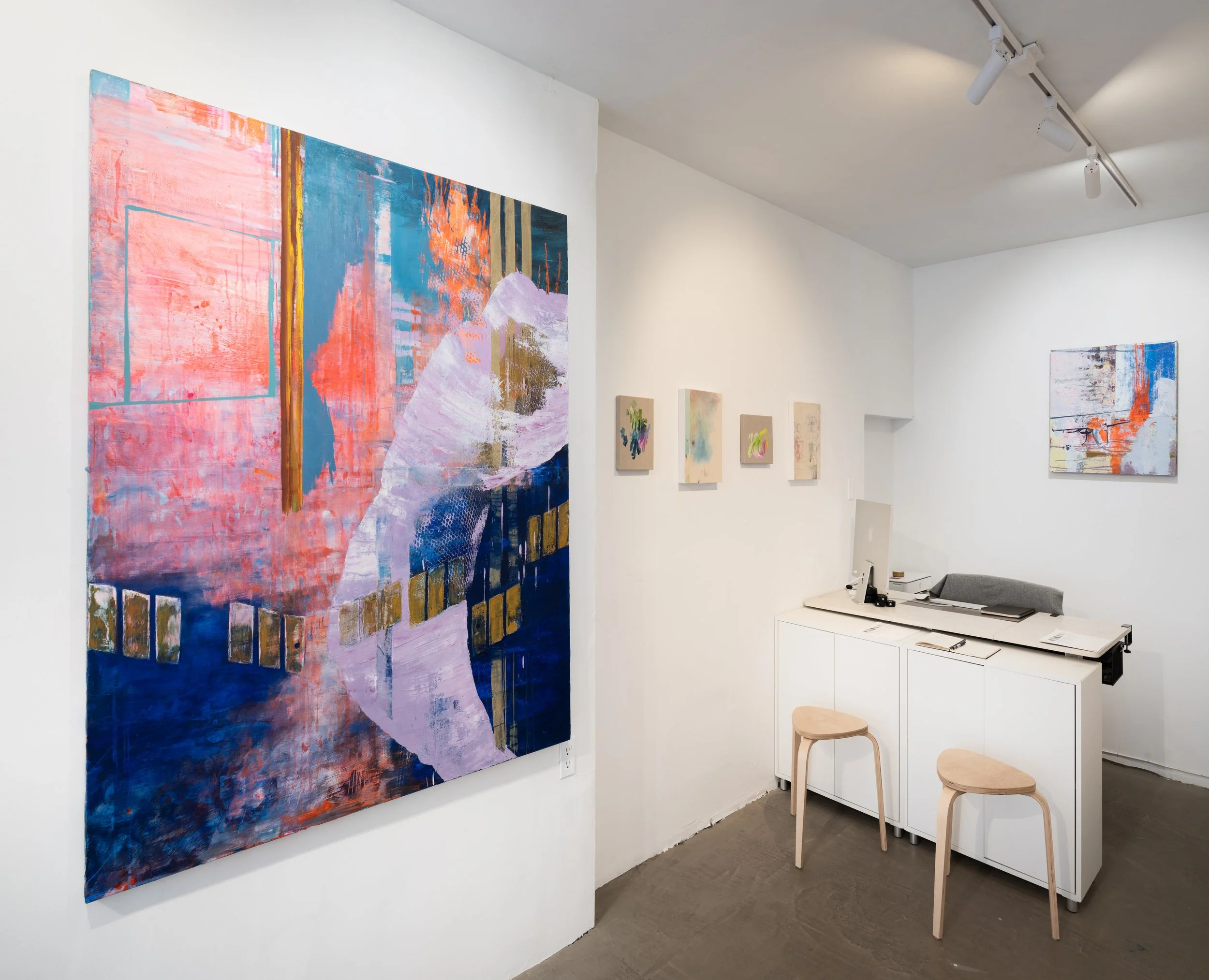
Street Corner Conversations brings together Sharon Butler, Wendy Fulenwider Liszt, and Ariel Mitchell—three artists who approach abstraction as an active, embodied way of engaging the world. The exhibition’s title, borrowed from Vanessa Bell’s early foray into abstraction, places the works as voices in dialogue: distinct, overlapping, and rooted in the ongoing evolution of abstract painting. In this context, Street Corner Conversations positions abstraction as a meeting place—an intersection where lines of thought, gesture, and experience converge, overlap, or pass each other by.
The exhibition engages the political dimensions of painting without requiring overt narrative content. The politics of abstraction emerge through self-determination, refusal, attention, and persistence. Historically, women who pursued abstraction did so against cultural and institutional constraints; to claim time, space, and intellectual seriousness was itself a transgressive act. The works on view extend that lineage, asserting abstraction not as withdrawal from the world but as a way of engaging it—through material choices, through the body, and through the slow, accumulative processes of making.
Sharon Butler’s “new casualism” takes up the incomplete, the provisional, and the unfinished as meaningful categories. Her paintings challenge the authority of polish and perfection, foregrounding process as a form of truth-telling. Their casualness is not carelessness, but a refusal of rigid hierarchies. Butler’s paintings underscore the generative instability of making, allowing provisional marks and intuitive decisions to construct a vibrant visual logic.
Wendy Fulenwider Liszt approaches painting as a site of reconstitution. She imagines each work as a body - vulnerable, visceral and alive with presence. Drawing from experiences of impact, imbalance and illumination, she treats paint as both skin and medium, layering translucent and opaque color, then sanding, scraping and carving to reveal fiery forms. Architectural lines, horizons, and anthropomorphic forms drift in and out of legibility as they release themselves from fixed influence.
Ariel Mitchell’s paintings balance abandon with restraint. Working in oil on raw linen, she begins each piece with a white underpainted form that becomes the armature for everything that follows—color, gesture, eruption, and pause. This frees Mitchell from the traditional edges of a canvas; the initial shape provides structure without confinement, allowing the movement of the painting to extend beyond the boundaries of the linen even as the linen remains its support.
Together, these artists share a deep commitment to material, process, and form—each staking out her own vocabulary of abstraction while expanding the possibilities of what the medium can hold. They reveal painting not as an escape from the present, but as a space where thinking can be embodied, where form becomes a mode of conversation, and where the surfaces we encounter mirror the conditions—political, social, and emotional—that shape the world in which they are made. The exhibition suggests that abstraction, far from being detached, remains deeply connected to lived experience. It is an act of presence, insistence, and continual becoming.
Sharon Butler (b. 1959, New London, Connecticut) moved to Williamsburg, Brooklyn, after earning degrees at Tufts University (BA), Massachusetts College of Art, (BFA), and the University of Connecticut (MFA). She has held solo exhibitions in NYC at Jennifer Baahng Gallery, Theodore Gallery, Pocket Utopia, and Central Fine Arts; in Connecticut at Slater Memorial Museum, University of Connecticut, Real Art Ways, and Furnace Art on Paper Archive; in Seattle at SEASON. Her work has been featured in publications such as The Brooklyn Rail, Hyperallergic, artcritical, The New Criterion, and New York Magazine. She has received awards from Creative Capital and the Warhol Foundation, Yaddo, Connecticut Commission on the Arts, and the Pollock-Krasner Foundation. She lives and works in Long Island City, Queens.
Wendy Fulenwider Liszt received her MFA in Painting from Hunter College in 2017, where she was awarded the Kossak Painting Fellowship. She is currently on view in a group show with the Canopy Program curated by Erika Ranee in New York City in addition to McBride / Dillman.. She was featured in Studio Visit Magazine, selected by Sarah Montross of the deCordova Sculpture Park. Previous solo and two-person exhibitions include Inside Out at Gallery Kayafas in Boston and Sanctity at Thomas Hunter Projects in New York City. Fulenwider Liszt has participated in the Artist in Embassies Program in Tunisia, the Governors Island Art Fair in New York City and in No Commission Berlin in 2017 curated by Swizz Beatz and Nicola Vassell. She works across painting, sculpture, printmaking, and drawing in her studios in New York City and Massachusetts, where she lives with her husband, their two children, and the family dog, Penelope.
Ariel Mitchell is a Brooklyn-based painter whose works delve into the dynamic interplay of color, texture, and form. She holds an MFA from CUNY Hunter College (2021) and a BFA from the Maryland Institute College of Art (2007). Ariel has participated in several prestigious residencies, including the Vermont Studio Center (2007), Griffis-Orpheus Foundation in Bulgaria (2008), Arteles in Finland (2011), and SiM Reykjavik in Iceland (2013). Currently spotlighted by Hauser and Wirth’s Emerging Artists platform, her work has also been featured in publications like Forbes, Whitehot Magazine, Studio Visit, and ROV 4.